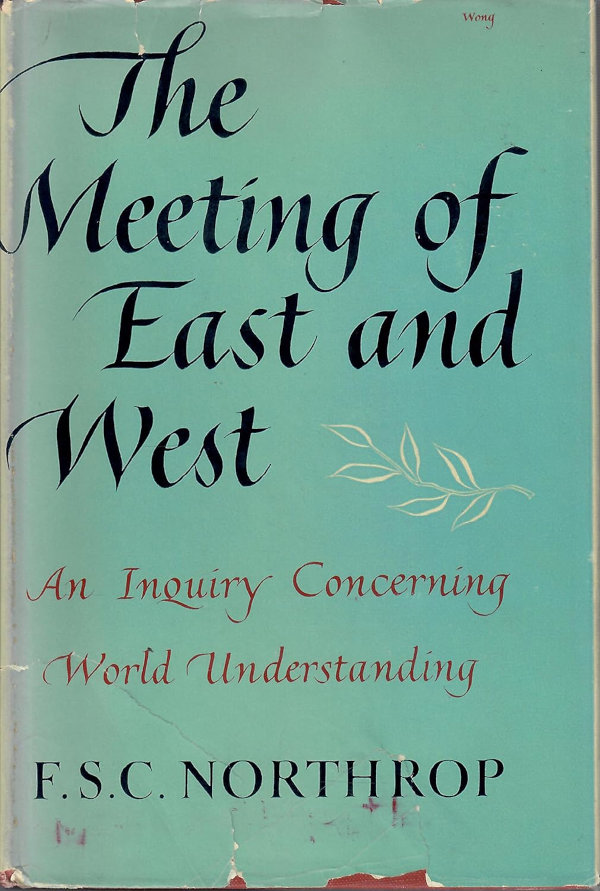
This is one of those truly great books that slaps your mind awake, offering you a completely new world view and interpretation of intellectual history. The Meeting of East and West: An Inquiry Concerning World Understanding, New York: The Macmillan Company, 1946. Reprinted in 1979, Ox Bow Press.
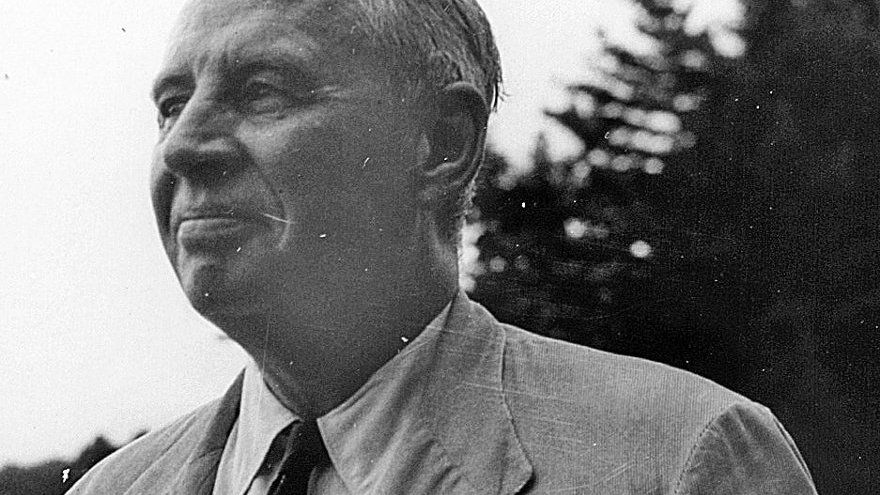
"The Meeting of East and West" by F. S. C. Northrop (Frederick Sontag Craig Northrop) is a philosophical and cultural work that explores the interaction and differences between Eastern and Western thought. Northrop, a prominent philosopher, examines how the intellectual traditions of East and West have shaped the modern world and their potential for mutual understanding.
Key Themes:
- Cultural and Philosophical Dichotomy: Northrop argues that the intellectual and cultural traditions of the East (primarily represented by India, China, and Japan) and the West (primarily represented by Europe and America) have developed fundamentally different worldviews. The West, influenced by Greek philosophy and later European thought, tends to emphasize analysis, rationalism, and individualism. In contrast, the East places greater importance on intuition, holism, and spirituality. These differing approaches result in divergent ways of understanding reality, society, and the self.
- Eastern Thought: Eastern traditions, particularly those rooted in Buddhism, Confucianism, and Hinduism, emphasize interconnectedness, unity, and the fluidity of existence. The Eastern worldview is often described as being more holistic, where everything is seen as part of a greater whole, with less distinction between subject and object.
- Western Thought: Western traditions, especially through the influence of Greek philosophy (e.g., Aristotle and Plato) and later European thinkers (e.g., Descartes and Kant), have prioritized a more analytical and logical approach to understanding the world. Western thought tends to be more concerned with the distinction between self and other, the empirical, and the rational.
- Mutual Influence and Understanding: Northrop explores how these two traditions have influenced each other over time, particularly in the modern world. He suggests that both cultures have much to learn from one another. For example, Eastern thought can enrich Western philosophy by offering a broader, more integrative view of reality, while Western science and technology could provide Eastern cultures with new tools for material development and social progress.
- Modern World and Integration: Northrop argues that the globalized world requires a deeper understanding of both traditions, not just in a superficial or practical sense, but also in terms of how we see knowledge, ethics, and the nature of human existence. He is optimistic about the potential for a more integrated worldview that draws from both the Eastern and Western traditions.
In the conclusion, Northrop suggests that the future of humanity lies in synthesizing these two ways of thinking—drawing on the strengths of both Eastern and Western philosophies to create a more holistic, inclusive, and spiritually aware global society. He advocates for cross-cultural dialogue and understanding as essential for addressing the complex challenges of the modern world. "The Meeting of East and West" is a philosophical exploration of how two deeply different cultures can influence each other, and how their interaction might shape the future of human thought and civilization.
PDF F. S. C. Northrop: The Meeting of East and West